
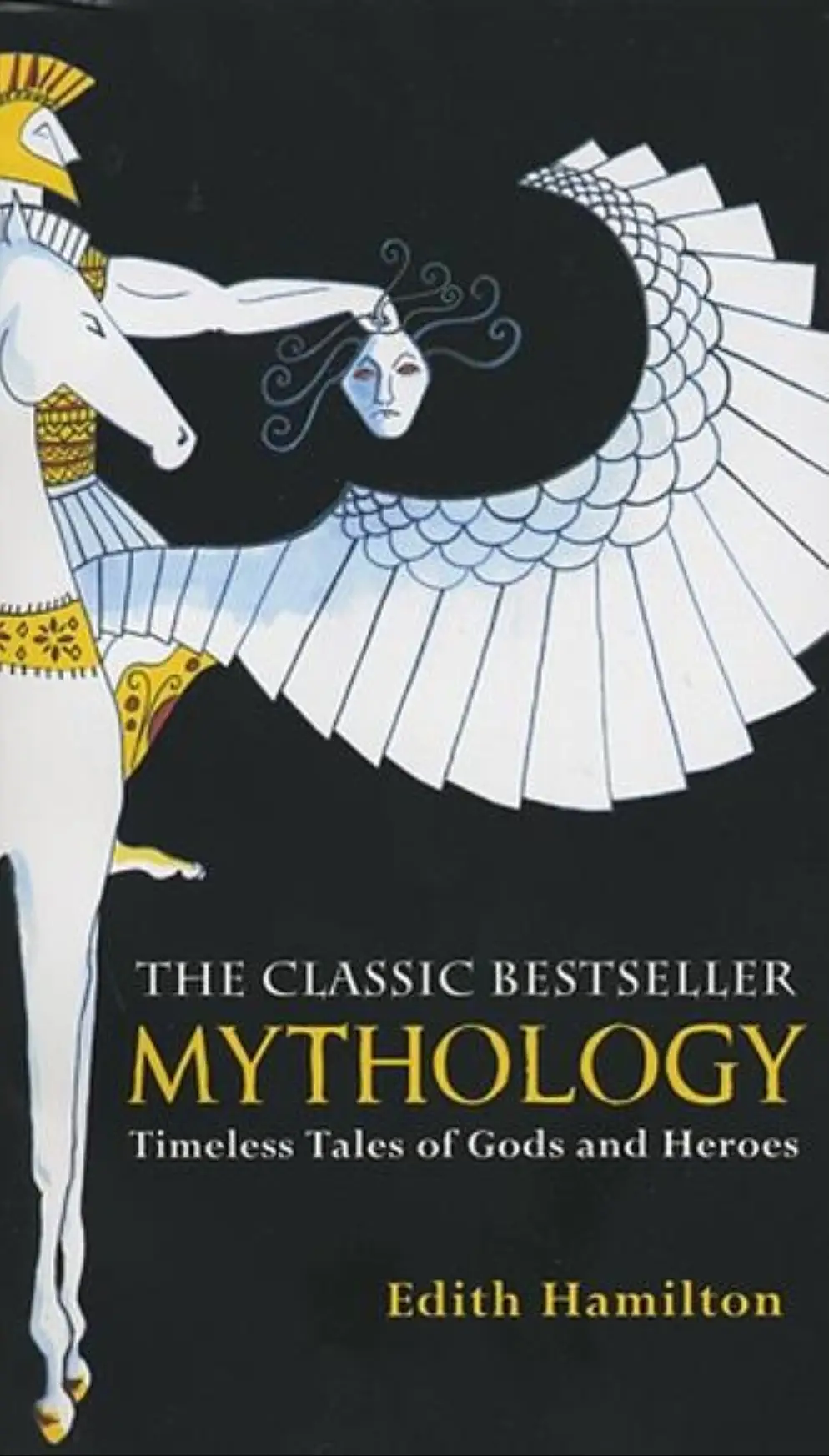

- Title: Mythology
- Author: Edith Hamilton
- Genre/Subject: Mythology
- Publisher: Grand Central
- Publication Date: 1942
- Start date: 4/29/25
- Finish date: 5/29/25
Review:
This was a great book, both when it was originally published in 1942 and reading it now in 2025. In cliché terms it has stood the test of time as have the myths and epics described inside this remarkable volume.
I have been reading Greek drama and myths since I was a youth so I wasn’t coming in cold by any stretch of the imagination. But this book explains all, okay most, of the myths, epics, dramas clearly without dumbing them down. So for example I have read Ovid but it can be difficult because it is written in a sort of prose-poem way. In this book the author first prefaces each entry with what the source or sources are. So you might read something like “the earliest source for this is in a Homeric hymn, but it is described in large part by Euripides in his play, and Theocritus is the source for the cyclops episode at the end.”
I immediately caught on to the fact that Edith Hamilton really knows her subject. For a woman in 1940s England this would have been very unusual. University men were expected to know Greek myth, have read all the classical Greek literature and would know Homer better than their own gardener. But women were expected to know household management, dressmaking, and most importantly baby making. Not the complex and vastly convoluted classical Greek worldview, and yet here we have it in plain English almost 100 years later and still in print.
Unsurprisingly the book begins at the beginning of all things with the accounts of creation and the primordial gods. Before the Olympians were the Titans and before that, and before that and so on back to the original void. Then, after the world was created and going along nicely we start to get very familiar with the 12 Olympian gods. These 12 deities were involved in everything that followed so it is important to learn and familiarize ourselves with them right away. And I mean everything that followed from Homer to Clive Cussler. Hamilton made it clear that without the Olympians there would be about a half dozen myths which no one would really care about so that’s saying something.
After creation, the earliest heroes: Prometheus, Polyphemus, Adonis, Orpheus to name a few. Many like Orpheus would be considered lovers, but hero in this case is more in the sense of protagonist rather than a Hercules figure.
And then we get to Jason and the Argonauts (one of which was Orpheus, so there!) and their quest for the Golden Fleece. As important as this myth is, and we reference it in our everyday lives, it is only told in full by a relatively obscure author by the hemi-loaded name of Appolonius of Rhodes. I own and have read The Voyage of Argo but for the vast majority of humans who have not read it I can not think of a better and easier synopsis than the one Edith Hamilton presents here.
Perseus, Theseus, and Hercules each get a chapter and then we move on to… Troy. Nothing in literature or myth has a greater effect on western literature than the Siege of Troy and its subsequent fall. I’ve read the Iliad completely at least twice and parts of it many times, and it’s something I highly recommend too. But Neilos, what about the Odyssey? I don’t like Odysseus and neither should you, but it’s a great story and second only to the Iliad in importance to our western literary canon. And once again Edith Hamilton explains it without dumbing it down, so you should read it, but if all you read was this exposition you will be just fine.
The final third of the book draws on the dramas of the three greatest Athenian poets: Aeschylus, Sophocles, and Euripides. I have read all three of the Big Three and the exposition in this volume is hands down the best I have ever read and scholars over the last century agree with me. You get the story without getting too involved in the drama the way you do when you read or see the plays.
And to tie everything up with a nice bow we end there…. but no! There is a short section at the end which is dedicated to the Norse myths and their depressing pantheon. The Olympian gods knew no fear, needed no courage and never tasted failure as they were truly immortal and blessed. Not so with Odin and the Norse gods. Not only did they have a constant enemy in the Giants but they also knew for an immutable fact that they were destined to win over the Aesir (as the Norse god family was named), leaving Asgard in ruins. A bit like meeting the man of your dreams, then meeting his beautiful wife. Ironic, don’t you think?
I’ve already spent longer than I planned to in extolling the virtues of this remarkable book but I just want to make sure that I don’t miss out on making the point that this is bordering on must-read territory for anyone interested in a classical liberal education. Wind the clock back a century to 1925 and a well read and educated man or woman would be conversant in not only the myths but also in how they relate in poetry, drama and modern literature. We’ve rather lost sight of this, and while we might say that a hockey player had an Odyssey to make it to the finals we may not fully appreciate the gravity of that statement. Things change, times change but knowing the stories that have shaped western civilization for thousands of years makes one better equipped to deal with the weight of history. Don’t forget the Nazi obsession with Norse myth and how it shaped everything from social policy to the naming of siege guns. And don’t forget how cringe-worthy it is when someone misattributes a classical reference live on television, “That sounds like a voyage of Narcissus for the national team.” Erk. So in 2025 this book if not a must-read is still a should-read. I hereby award this remarkable book the coveted Neilosian Five Stars.
This book made me want to: Mind my manners in woodland glades, avoiding killing anything that might be sacred to Artemis.
Overall rating: 
Readability:
Plot:
Other: Feeling way less gay compared to any of these classical poofters.